Many parents in our community have heard some version of the same sentence from a doctor: "Folate levels are normal." And yet the child who eats reasonably well and takes a children's multivitamin still isn't talking the way his siblings did at the same age. The blood test wasn't wrong. It was measuring the wrong compartment.
The problem sits at the door to the brain
Folate gets into the brain mostly through one receptor, folate receptor alpha, which sits in the choroid plexus and pulls the vitamin out of the blood into the cerebrospinal fluid. In some children the immune system makes antibodies against that receptor. When the antibodies bind, the door jams; folate can be normal or even high in the blood while the fluid bathing the brain runs short. Researchers call that state cerebral folate deficiency, and Vincent Ramaekers described the antibody mechanism in a series of papers starting in 2005 (Ramaekers et al., Dev Med Child Neurol 2007; PMID 18355335 for the 2008 diet study).
How common is it? A 2021 systematic review by Rossignol and Frye pooled the published cohorts and put folate-receptor autoantibodies at roughly 71% of children with autism, and cerebral folate deficiency itself at about 38% (J Pers Med 2021, PMC8622150). Those numbers come from clinic populations and small studies, so treat them as "a lot" rather than as precise prevalence. They still explain why folic acid in cereal and gummies does nothing for these kids: folic acid uses the same jammed door.
Folinic acid takes a different one. At the higher concentrations you get from supplementation, it can ride the reduced folate carrier into the brain, a transporter the antibodies leave alone (Frye 2020 review, PMC7477301). It also skips the enzyme step that synthetic folic acid needs, which matters for the many children carrying slow MTHFR or DHFR variants.
What the trials actually found
The study everyone cites is Frye and colleagues, Molecular Psychiatry 2018 (PMC5794882). Forty-eight children with autism and language impairment, twelve weeks, folinic acid at 2 mg per kilogram per day up to 50 mg, against placebo, double-blind. Children on folinic acid gained about 5.7 standardized points more on verbal-communication measures than the placebo group; in the antibody-positive subgroup the gap widened to about 7.3 points, and 65% responded versus 24% on placebo. Side effects didn't differ from placebo.
Four smaller controlled trials sit around it. Renard's EFFET pilot in France used a fixed 5 mg twice daily and saw a bigger drop in ADOS scores than placebo (Biochimie 2020, PMID 32387472). Batebi added 10 mg a day to risperidone and reported less inappropriate speech, stereotypy and hyperactivity than risperidone alone (Child Psychiatry Hum Dev 2021, PMID 33029705). Zhang's 2025 trial in Nutrients looked at high-dose folinic acid and found the response tracked folate-metabolism gene variants (PMID 40362912). And the Rossignol and Frye meta-analysis, across 21 studies of varying quality, reported meaningful improvements on social-responsiveness and behaviour scales, strongest in antibody-positive children.
You may also have seen a fifth trial quoted, Panda 2024 from India with about 80 children. Don't. The European Journal of Pediatrics retracted it in January 2026 after reviewers found data-table inconsistencies and the authors couldn't reproduce the results. We removed it from every page on this site and from our protocol document.
What we think this evidence is, and isn't
We're a supplement company, so read this part with that in mind.
The mechanism is real. The antibody work has been replicated across labs and countries, and the FDA's decision in March 2026 to approve leucovorin, which is prescription folinic acid, for cerebral folate deficiency with a confirmed FOLR1 gene variant confirms that the molecule does what the biology says it should. The same agency said in the same breath that the evidence for autism in general is insufficient, and on the numbers it's hard to argue: fewer than 100 children in the largest surviving trial, no large multicentre study, and blinding that critics have picked at. The American Academy of Pediatrics tells its members the same thing.
So our position is narrower than the headlines. Folinic acid is the one folate form with controlled-trial evidence in this population; the children most likely to respond are the antibody-positive ones; the effect, where it shows, is on language and behaviour scales over roughly three months; and the safety profile in every trial has been unremarkable. That's a reason to try it with your clinician's knowledge and to track what you see. It isn't a promise, and anyone who sells it as one is guessing on your behalf.
Why the form and the excipients matter
Two practical things fall out of the research that most product pages skip.
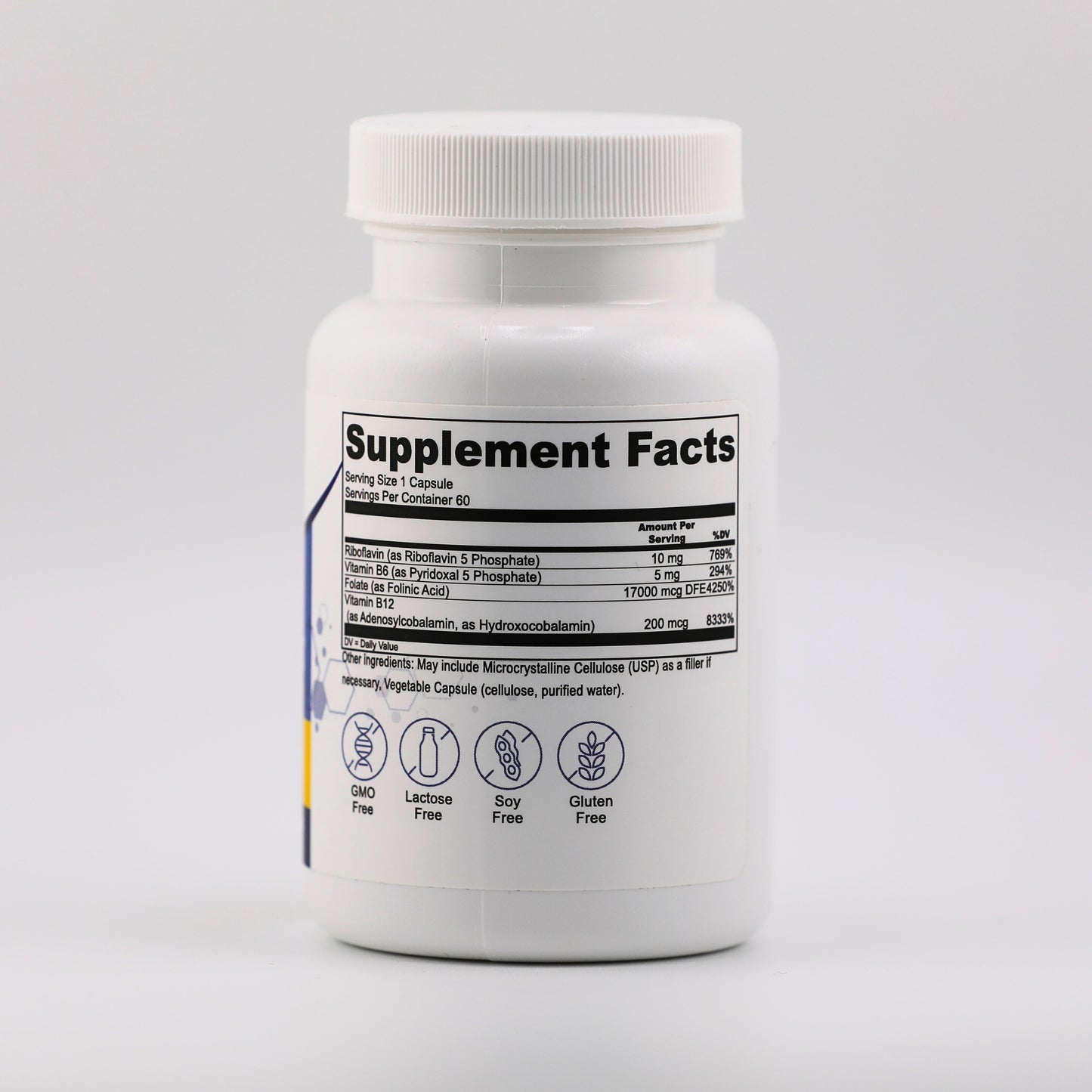
First, milk. In Ramaekers' 2008 study, a milk-free diet dropped folate-receptor-blocking antibody titers in children with cerebral folate deficiency from about 2.08 to 0.35 pmol per millilitre, and reintroducing cow's milk pushed them to about 6.53. Prescription leucovorin tablets are typically made with lactose as a filler. That's a small amount, but for a child whose antibodies react to milk proteins, a lactose-free capsule is the cleaner choice; it's why Speech Essentials is made without lactose, gluten, soy or GMO ingredients.
Second, dosing shape. The trials used weight-based doses that are awkward to reach with 5 mg tablets. A 10 or 12 mg capsule you can open and split is easier to titrate. We keep the weight-based details out of the product page on purpose and put them in the practitioner protocol, because that arithmetic belongs with the person who knows your child's weight, labs and medications.
Questions to take to your doctor
Ask whether a folate-receptor antibody test makes sense before starting; it isn't FDA-cleared, but a positive result changes the odds. Ask about dropping synthetic folic acid from fortified foods and multivitamins, since it competes at the same receptor (Wiens and DeSoto 2017, PMC5704156). Ask how to start low and go slowly, and what a temporary reaction looks like. And tell them every medication your child takes.
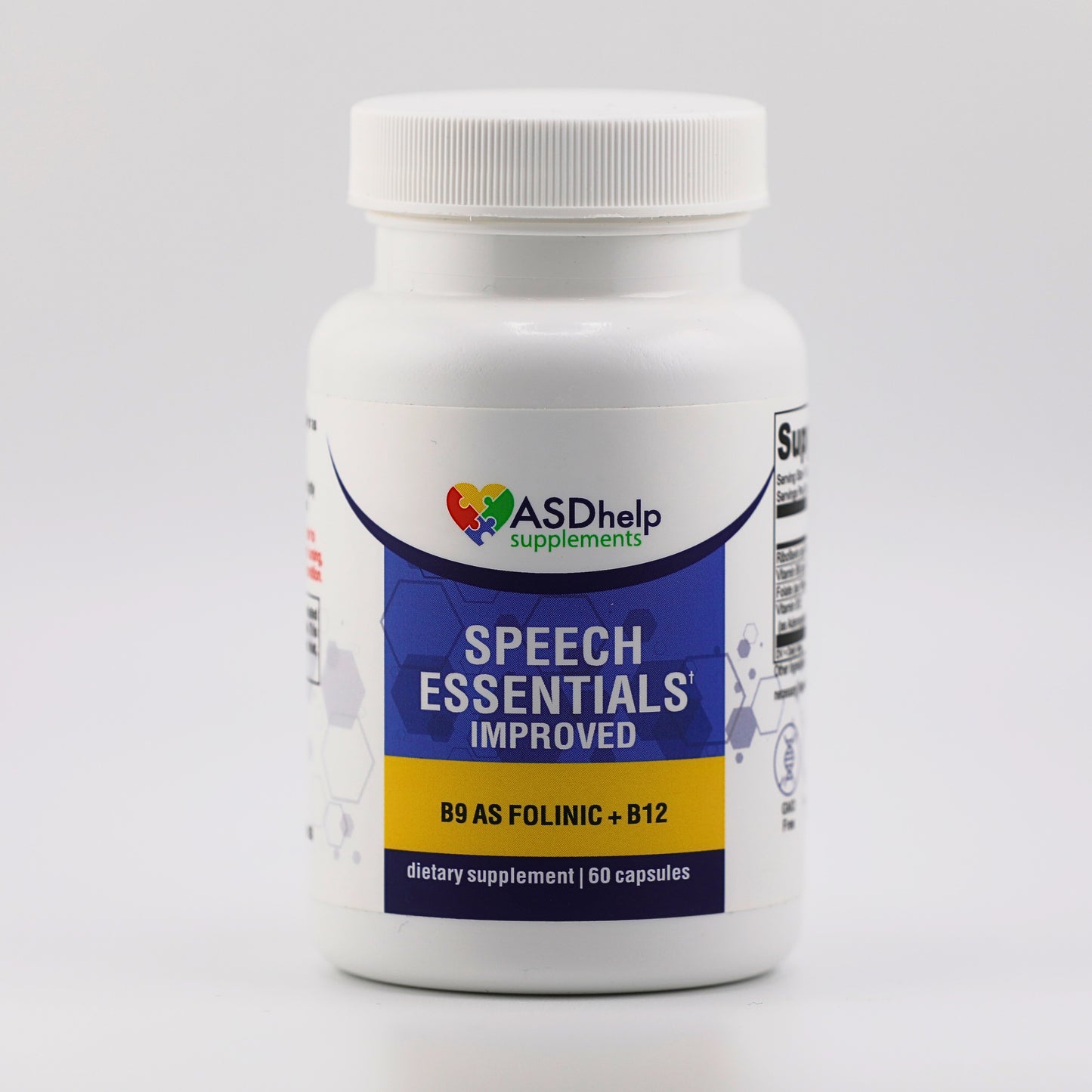
Speech Essentials Improved is our folinic acid formula with activated B2, B6 and two forms of B12. Speech Essentials Pro is the higher-folinic, three-ingredient version for practitioner-guided titration. Which one fits your child →
Sources. Frye RE et al. Mol Psychiatry 2018, PMC5794882 · Rossignol DA, Frye RE. J Pers Med 2021, PMC8622150 · Renard E et al. Biochimie 2020, PMID 32387472 · Batebi N et al. Child Psychiatry Hum Dev 2021, PMID 33029705 · Zhang C et al. Nutrients 2025, PMID 40362912 · Ramaekers VT et al. Dev Med Child Neurol 2008, PMID 18355335 · Frye RE. Semin Pediatr Neurol 2020, PMC7477301 · Wiens D, DeSoto MC. Brain Sci 2017, PMC5704156 · FDA press release, 10 March 2026 · AAP clinician FAQ on leucovorin in autistic patients. Panda PK et al. Eur J Pediatr 2024 (PMID 39243316) is retracted and not cited.
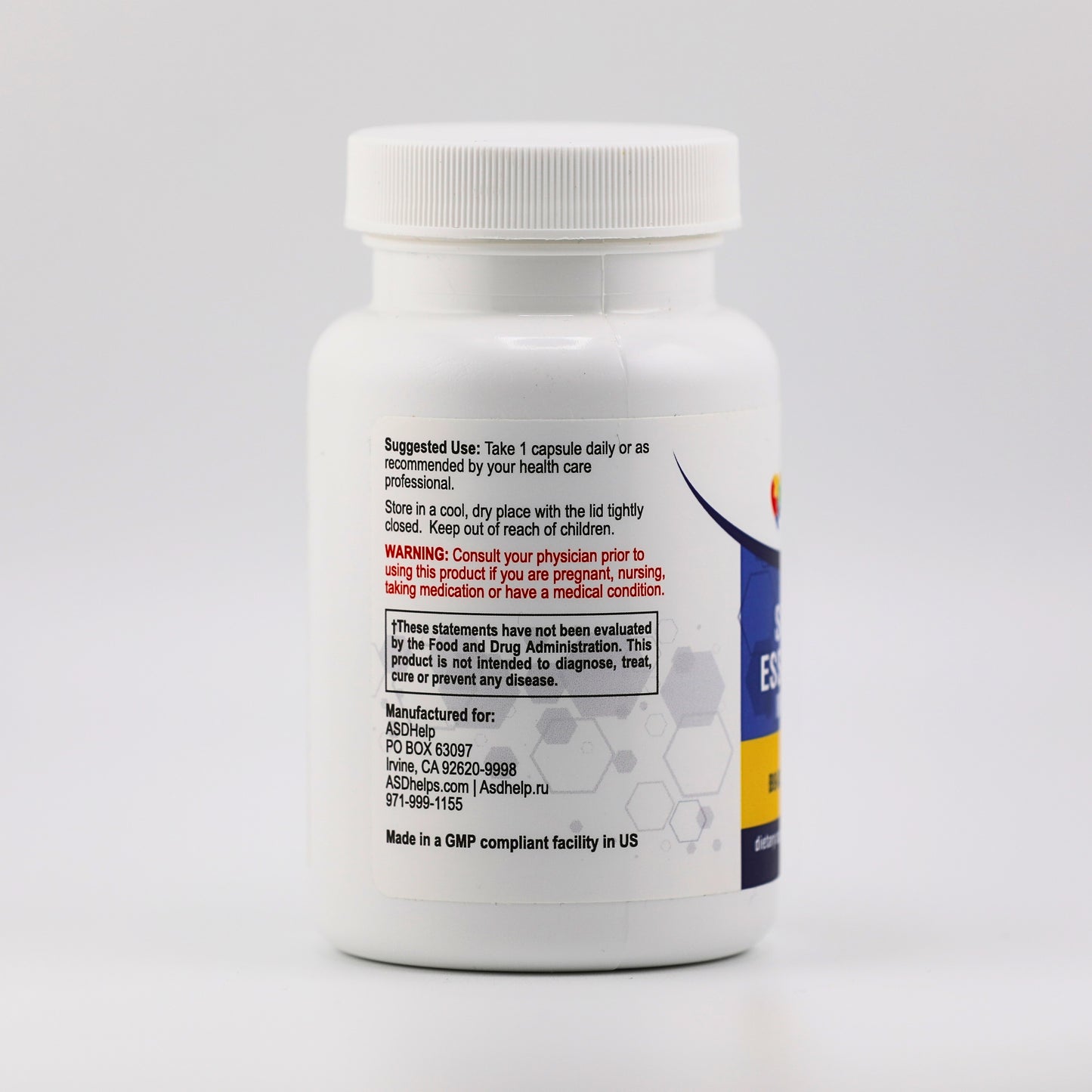
These statements have not been evaluated by the Food and Drug Administration. Speech Essentials is a dietary supplement and is not intended to diagnose, treat, cure or prevent any disease. This article is educational and is not medical advice.